
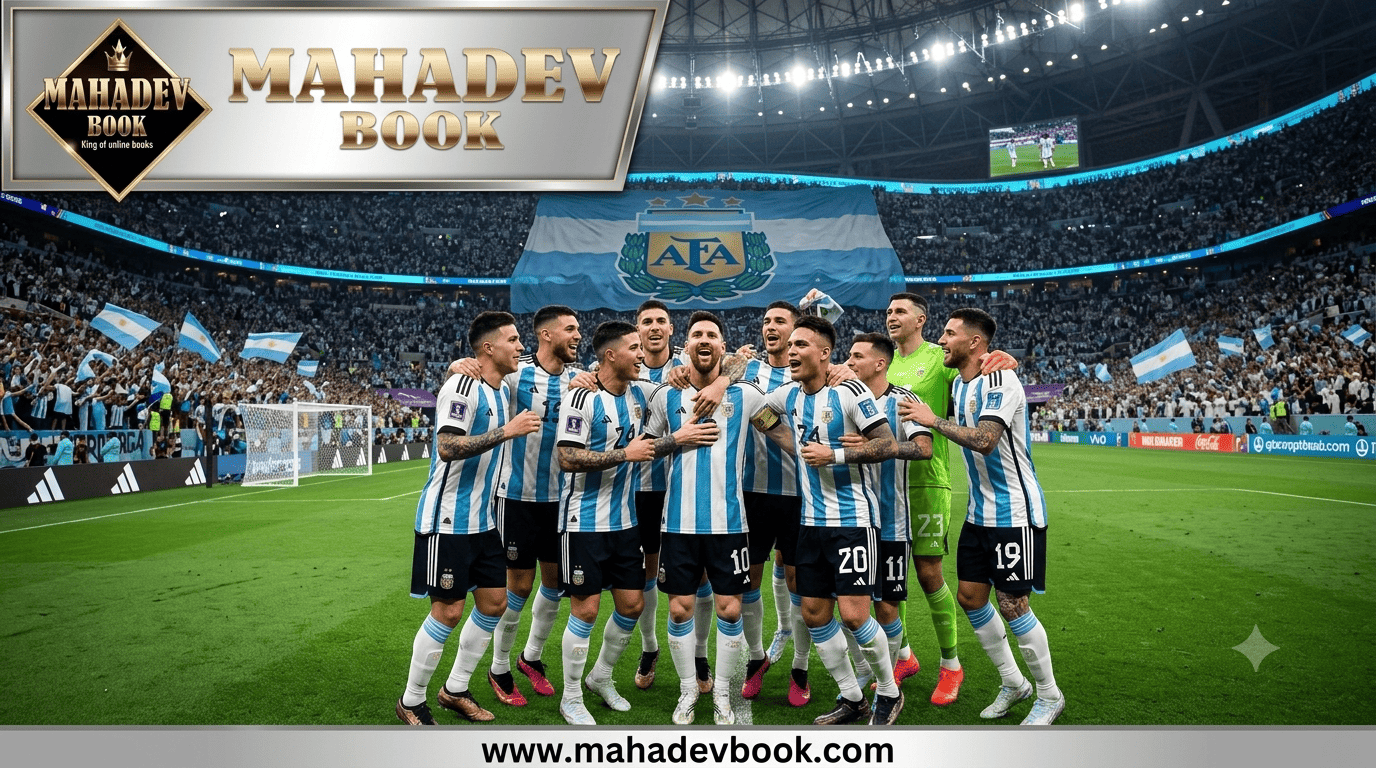
The Argentina national football team (affectionately known as La Albiceleste or the White and Sky Blues) stands as one of the most decorated, passionate, and iconic international teams in sports history. From the magical footwork of Diego Maradona to the global dominance of Lionel Messi, Argentina has consistently shaped international football culture. Whether analyzing tactical evolutions, historic World Cup runs, or global fan engagement, the journey of La Albiceleste represents grit, genius, and unmatched footballing heritage.
A Rich Historical Foundation: The Early Years
Football was introduced to Argentina in the late 19th century by British immigrants, but the local population quickly adopted and redefined the sport. The Argentina national football team played its first official international match against Uruguay in 1902, establishing a historic rivalry that remains one of the oldest in international football.
During the early decades, Argentina established itself as a South American powerhouse by winning multiple South American Championship titles (now known as the Copa América). Their flair, technical brilliance, and short-passing style set them apart long before the World Cup era fully materialized.
Major International Trophies Overview
| Competition | Titles Won | Winning Years |
|---|---|---|
| FIFA World Cup | 3 | 1978, 1986, 2022 |
| Copa América | 16 | 1921, 1925, 1927, 1929, 1937, 1941, 1945, 1946, 1947, 1955, 1957, 1959, 1991, 1993, 2021, 2024 |
| CONMEBOL–UEFA Cup of Champions | 2 | 1993, 2022 |
| FIFA Confederations Cup | 1 | 1992 |
The Three World Cup Conquests
Argentina’s identity on the global stage is defined primarily by its three FIFA World Cup victories, each associated with a unique era of tactical masterstrokes and heroic individual performances.
1. 1978: Glory on Home Soil
Hosted under intense domestic political pressure, the 1978 World Cup saw Argentina capture its first world title. Guided by manager César Luis Menotti and powered by the prolific scoring of Mario Kempes, La Albiceleste defeated the Netherlands 3–1 in a tense final after extra time at the Estadio Monumental in Buenos Aires. Kempes won both the Golden Boot and Golden Ball, cementing his status as Argentina's first modern World Cup legend.
2. 1986: Diego Maradona’s Masterclass
The 1986 FIFA World Cup in Mexico remains one of the most iconic tournaments in sports history, largely due to Diego Armando Maradona. Serving as captain, Maradona delivered a series of breathtaking performances, most notably in the quarter-final against England. That single match featured the infamous "Hand of God" goal alongside the "Goal of the Century," where Maradona dribbled past five English players from his own half. Argentina defeated West Germany 3–2 in the final to lift their second trophy.
3. 2022: Redemption in Qatar
After a 36-year wait filled with final heartbreaks, Lionel Scaloni led Argentina to glory at the 2022 FIFA World Cup in Qatar. Captained by Lionel Messi, the squad recovered from an opening-match shock against Saudi Arabia to execute a flawless tournament run. The final against France—ending 3–3 after extra time and decided by a 4–2 penalty shootout—is widely considered the greatest football match ever played. Messi earned his second Golden Ball, finally adding the missing trophy to his legendary career.
Tactical Evolution: From Individual Genius to "La Scaloneta"
Historically, Argentina relied heavily on individual playmakers (el enganche) like Maradona, Juan Román Riquelme, and Ariel Ortega. However, modern football demanded structural flexibility and collective pressing.
When Lionel Scaloni took charge in 2018, critics questioned his lack of managerial experience. Yet, he built a cohesive environment nicknamed "La Scaloneta." Instead of placing all the tactical burden on Lionel Messi, Scaloni surrounded him with dynamic, hard-working midfielders like Rodrigo De Paul, Alexis Mac Allister, and Enzo Fernández, alongside reliable defensive anchors like Cristian Romero and Emiliano Martínez.
This tactical balance enabled Argentina to achieve a 36-match unbeaten streak between 2019 and 2022, securing back-to-back Copa América titles (2021, 2024), the 2022 Finalissima, and the 2022 World Cup.
Iconic Legends of La Albiceleste
- Diego Maradona: A figure of raw emotion, unmatched dribbling skill, and national pride. Maradona played 91 matches for Argentina, scoring 34 goals, and remains a central cultural figure in Argentine society.
- Lionel Messi: Argentina's all-time leading appearance maker and top goalscorer. Messi's international career overcame years of intense media scrutiny, culminating in an era where he won four major international titles in four years.
- Gabriel Batistuta ("Batigol"): The classic powerhouse striker who scored 54 goals in 77 appearances, known for his clinical finishing in the 1994, 1998, and 2002 World Cups.
- Daniel Passarella: The legendary captain of the 1978 side, known as one of the greatest goal-scoring defenders in football history.
- Javier Mascherano: The defensive engine who earned 147 caps, embodying grit (garra) and leadership across four World Cup campaigns.
Fan Culture and Online Community Engagement
Football in Argentina is far more than a sport; it is a profound cultural identity. The passion of Argentine supporters—known for their vibrant chants, stadium displays (recibimientos), and unwavering loyalty—creates an electrifying atmosphere wherever the national team plays.
During major international tournaments, millions of fans follow every tactic, transfer rumor, and match outcome closely. Football enthusiasts looking for interactive platforms, match analysis, and community discussion frequently visit sports hubs like Mahadev Book. Fans seeking reliable access and live updates often use an official Mahadev Book ID to stay connected with match insights and join real-time sports discussions around major tournaments.
Get Mahadev Book ID on WhatsApp
Connect through WhatsApp to get more information and access support for your Mahadev Book ID.
Get Mahadev Book ID on WhatsAppFierce International Rivalries
- Brazil (Superclásico de las Américas): Widely considered the greatest international football rivalry. Matches between Argentina and Brazil feature intense tactical battles, star-studded lineups, and decades of debate over who produces superior talent.
- Uruguay (Clásico del Río de la Plata): The oldest international derby outside the UK, built on mutual respect and physical, high-intensity competition across decades of Copa América battles.
- England: A rivalry rooted in historical World Cup clashes, including the 1966 quarter-final, Maradona's legendary 1986 performance, and the dramatic 1998 penalty shootout in France.
- Germany: A tactical World Cup rivalry defined by three final matchups (1986, 1990, 2014) and intense knockout ties in 2006 and 2010.
The Future of Argentina Football
As legendary figures like Lionel Messi and Ángel Di María transition out of the national side, the future of the Argentina national football team remains exceptionally bright. The youth development pipeline continues to produce world-class talent, with young stars like Julián Álvarez, Alejandro Garnacho, Valentín Carboni, and Claudio Echeverri stepping up on the European stage.
Under the continuous development of the Argentine Football Association (AFA) and solid tactical frameworks, La Albiceleste is well-positioned to maintain its status at the pinnacle of international football for generations to come.
Stay Connected With Mahadev Book
Get updates, match insights, and Mahadev Book support directly through WhatsApp.
Chat on WhatsApp